

“Hope is being able to see that there is light despite all of the darkness.”
Desmond Tutu
My daughter turned 18 in March. Her birthday happened to land in the same month that marked half a decade since the COVID-19 pandemic altered the fabric of many of our lives forever. For a child (now adult), whose last four birthdays have fallen in the shadow of Very Severe ME (a cruel legacy of the COVID virus), the timing of her 18th birthday was painfully symbolic.
In the same month, proposed cuts to disability benefits in the UK threaten to disproportionately impact vulnerable groups who are already struggling. Charities, public health experts and politicians are expressing concerns that these measures will worsen health outcomes and lead to preventable deaths.
The frustrating irony (if only from an economic perspective) is that finding treatments and a cure for ME and prevention planning would unlock the potential of thousands currently unable to work or study due to this debilitating illness. However, against this backdrop, people with ME and their families in England have been warned that there is no additional funding allocated for the delayed Delivery Plan for ME. Besides the moral imperative, the economic case for #FundThePlan is irrefutable.
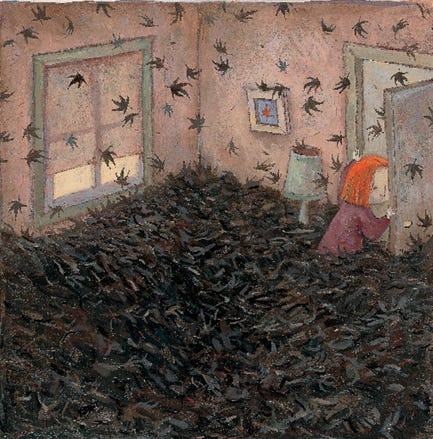
The unyielding grip of illness, the failure of society to address the ramifications of this global health crisis, the injustice, indifference, ignorance, gaslighting, lack of urgency, disappointment, discrimination, systemic injustice and lack of candour are all ‘dark leaves’ that threaten to overwhelm.
Inspired mostly by my daughter’s indomitable spirit, hope for me is not about seeking to deny the existence of these dark leaves. We can’t. For us, hope is resistance despite them. Shaun Tan’s ‘The Red Tree’ opens with an oppressive picture where the small girl is almost overwhelmed by dark leaves along with the poignant words ‘Sometimes the day begins with nothing to look forward to. And things go from bad to worse.’ Only on closer inspection of the scene does the reader perhaps notice hanging on the wall a small picture of a red leaf: a symbol of hope in the midst of adversity.
In a rapidly changing world, people whose lives have been turned upside down by ME, Long COVID and other complex chronic conditions frequently associated with an infection desperately need to find ‘red leaves’ wherever they can. Videos recorded for Long COVID Awareness Day by Professor Nancy Klimas and Professor Todd Davenport offer solidarity, real hope and encouragement.
Professor Todd Davenport, Chair of Long COVID Physio and Scientific Advisor to the Workwell Foundation, is dedicated to advancing research and understanding of ME and Long COVID. In this video he unpicks the meaning of hope which he sees as ‘an active process’ that ‘takes a lot of work’. He acknowledges that sometimes hope feels ‘impossible, indefensible and lonely’. The first step, he says, is being honest as this keeps hope from being ‘baselessly optimistic’ and ‘untethered to reality’. Professor Davenport does not mince his words in spelling out the reality of the situation: a world that has moved on, no cures and the scientific evidence base lagging behind what patients and their carers have worked out from lived experience. However, rather than seeing these facts as disheartening, he believes that ‘acknowledging them gives us permission to find the real things to be hopeful about’ including: hope in our community and hope in the clinicians and scholars tirelessly working to find cures. Professor Klimas, Professor Davenport and many of those who have previously shared messages of hope and solidarity with The Red Tree and ME are some of the hope-smiths we look to.
Professor Nancy Klimas, Director of the Institute for Neuro Immune Medicine, Nova Southeastern University, is a pioneering researcher and physician in the field of neuro-immune disorders including ME, Long COVID and veterans suffering from toxin exposure. In this video she speaks of how her prior research offered a head start when the pandemic hit, as existing studies already examined persistent post-viral conditions. Professor Klimas shares examples where emerging knowledge has guided her clinical approach, allowing her to identify and treat specific dysfunctions. While she acknowledges that groundbreaking treatments are still in development, she expresses optimism about ongoing research, likening the effort to historical breakthroughs in HIV treatment.
Here she offers strength for today and hope for tomorrow:
So I’m just gonna say to you: It takes time. Science is methodical. Science is careful. Science is better the more methodical it is and the answers will come for you and they are coming right now and they are coming fast and furious.
I know it’s hard to be patient when you’re so terribly ill but take the hope you need to take [..] because we’re gonna figure it out. We’re gonna find answers for you and we’re gonna keep at it until we do. Hang in there. Let’s go. Let’s cure this thing. I’m all about that. So keep the faith y’all.
To be able to hold onto hope is a privilege, one that not everyone can afford. For some, the weight of systemic injustice, poverty, or despair extinguishes the flame of hope before it can even flicker. It is a privilege to be able to imagine a brighter future, to believe in change, and to have the resources or support to pursue it. For those of us who can hope, let it not simply be a comfort to ourselves, but a driving force for action and solidarity.
Image used with kind permission from Shaun Tan.
Tan, S. (2001). The Red Tree. Hachette Australia. ISBN 978-0734411372.
These beautiful words always have me in tears by the end. They are tears of solidarity and hope. Just reading Nancy Klimas’ words made me feel I was loved despite this disease. Thank you 🍁🍂
Jo, your words have been so timely for my husband and I. He's my carer and is putting all his spare time into organising an event to raise awareness of M.E, yet time and time again we're rewarded only by indifference, particularly from wider family and friends.
He read your words to me this morning - we both needed to hear them. Keep going dear lady, you're doing a valuable job in keeping hope alive when we're all overwhelmed by the mountain of dark leaves.