

Many thanks to Becca Cecil and Helen Stout for sharing their beautiful artwork and powerful lived experience narratives with The Red Tree and ME. These narratives and artworks offer connection and solidarity. They remind us that people with ME are not alone but they also expose a harder truth: decades in, there is still no cure and no treatments and despite the scale of suffering, ME remains one of the lowest funded diseases in modern medicine. In the face of this neglect, art becomes protest - a refusal to disappear. Every piece disrupts the silence and insists on being seen.
Becca shared this piece while she was a final-year textile design student at Duncan of Jordanstone College of Art and Design in Dundee. She writes:
Can You See ME Now?
Becca Cecil, UK - Textiles


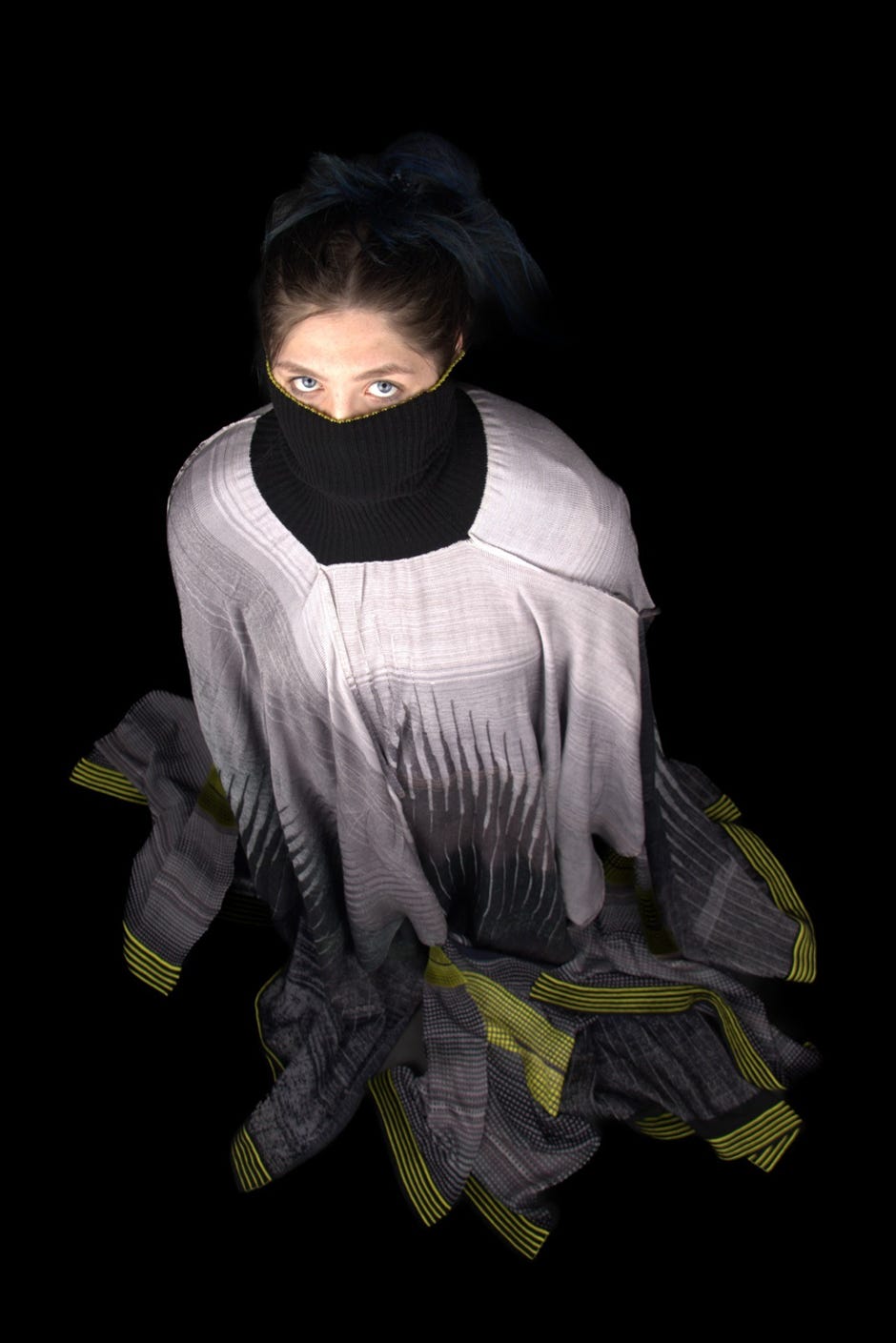
For my honours project, I wanted to create something meaningful - something that reflects a personal story, but also speaks to a wider issue that often goes unnoticed. ‘Can You See ME Now?’ is a tribute to my mum, Caroline, who has lived with Myalgic Encephalomyelitis for more than a decade.
This installation is a personal and emotional response to the lived experience of my mum, who has suffered with ME since 2009, following a virus. Her journey revealed to me the critical lack of research, education, funding, and public awareness surrounding this condition. Seeing her resilience in the face of such an invisible and isolating illness inspired me to create a body of work that gives voice to those who often go unheard. With this project, I aim to spark conversations and increase awareness, invoking a much-needed change.
Using textile design as both medium and message, this work merges data-driven design with expressive, tactile storytelling. The installation is informed directly by voices from the ME community, gathered through interviews where participants were asked two key questions: What colours do you associate with ME? and What words would you use to describe it? Their answers - blue, black, grey; heavy, restricting, isolated, forgotten - shaped the visual language of the piece.
These knits subtly embed data and statistics within their structure through variations in scale, colour, and form. Some samples resemble graphs; others evoke a broader atmosphere. To physically and psychologically convey the weight of the illness, I incorporated chains, curtain weights, and the scale of the showpiece enabled a weightiness by the sheer amount of fabric. Modular components, fastened with nuts and bolts, reflect fragmentation and restriction, mirroring the way ME disrupts lives. Colour was considered to create a gradient dragging visual effect, while pops of vibrant colour represent hope and those brief moments of normalcy.
Red features as an acknowledgement to the MEAction Network and their #millionsmissing campaign, which fights to bring visibility and justice to people with ME. Shades of blue and purple - drawn from interviews and representative of the ME Association - also appear throughout.
Displayed on a body form, the installation is communicated in an accessible way, bringing the human condition to the forefront. It served as a powerful reminder that behind this invisible illness is a real person. The fabric drapes heavily over the body, covering the neck and face, making you feel suffocated, invisible, and stuck, like you have no voice. Many people with ME are home- or bed-bound, unable to advocate for themselves - this installation speaks for them.
This project is a call for recognition, understanding, and reform. Through craft and storytelling, Can You See ME Now? transforms awareness into action - and action into hope.
I hope this brings a sense of hope and reassurance that change is happening. It may be slow - sometimes painfully so - but progress is underway. Even if it feels like there’s little you can do, know that there are people out there actively working, pushing, and believing in a better future for the ME community. And that future is coming. One red leaf at a time.
Helen is a valued member of the Red Leaf Creative Collaborative. She previously shared her piece The Kintsugi Leaf of Hope. Here she writes from a more personal perspective:
Threads Of Hope
Helen Stout, UK - Cross stitch
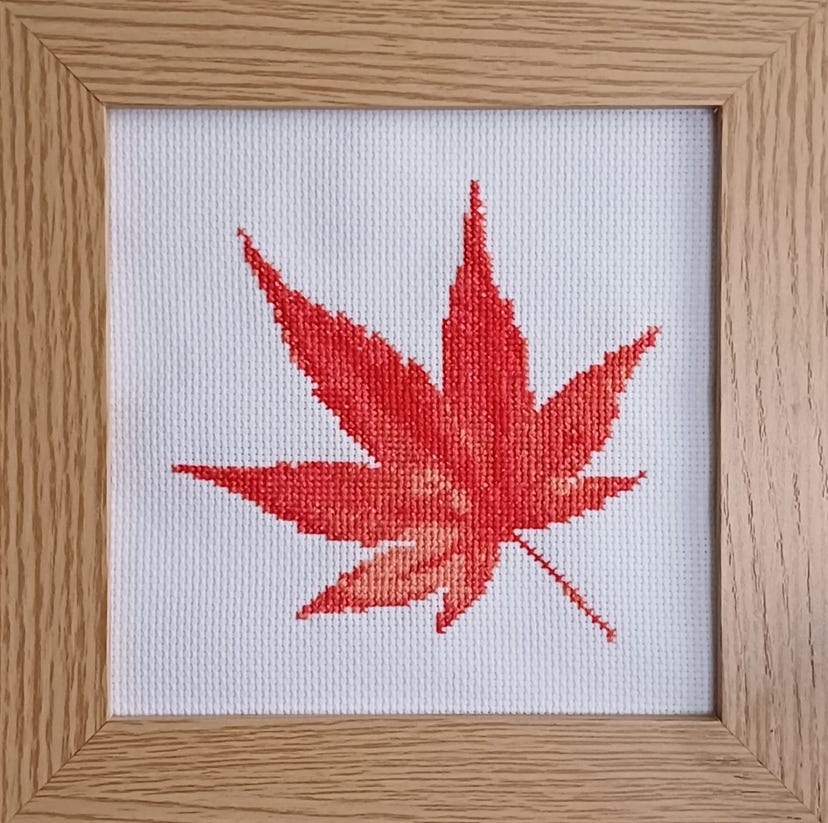
“Do what you can, with what you’ve got, where you are.” Theodore Roosevelt.
Motivated by Roosevelt’s words, I dug out my needle, threads, a cross stitch pattern, and, with the capacity to spend a few minutes a day concentrating, I began to do what I could with what I had. Several weeks later, I was beyond thrilled with what I’d achieved, a beautiful red leaf, just by doing a few stitches at a time!
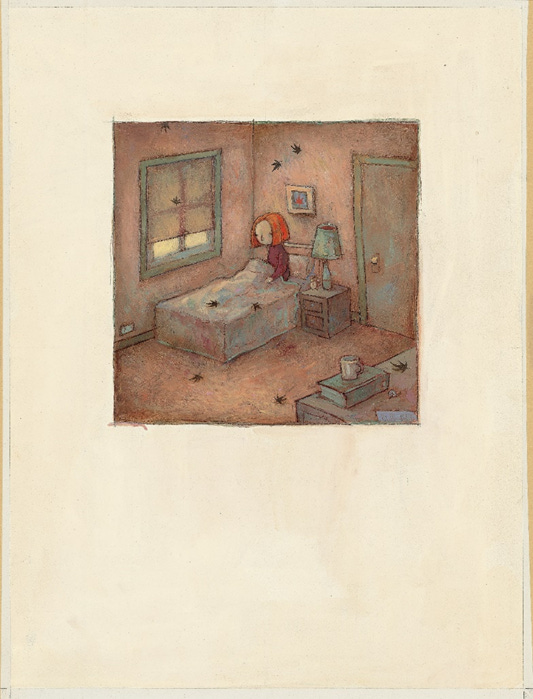
In the first pages of Shaun Tan’s book, The Red Tree, a red leaf is shown framed on a girl’s bedroom wall, a recurring symbol of hope for her to turn to during dark and despairing days. These pages inspired me to stitch this red leaf for my bedroom wall, and to call it ‘Threads of Hope’.
Years ago, I would have responded to Roosevelt’s words by getting out my bike or walking boots and doing a sponsored event. But along with so many others whose lives have been ravaged by ME, those days are a distant memory. I’ve been housebound for 6 years, the boots and bike are long gone, and my body now compels me to rest for most of the day. This enforced rest gives me the strength and ability to sit for a while to eat, to enjoy the garden, have the occasional visitor, or do a bit of cross stitch.
‘Threads of Hope’ is for the 25% of ME sufferers who’ve been severely and very severely affected by ME. We’ve been rendered housebound or bedbound and often feel forgotten and invisible to the world. Lying alone in the dark for most or all of our lives, day after day, year after year, it’s understandable that we can’t help wondering whether anyone sees us or anything is happening to help us, for the search for treatments and a cure for ME has been painfully slow.
I frequently turn to the encouraging words of hope and solidarity from clinicians and scientists on The Red Tree And ME Substack pages whenever I need reminding that something IS happening, and it IS gathering momentum, as various threads of research are gradually coming together to form a bigger picture.
I’m concluding with one of those quotes, from Tina Katsaros, La Trobe University, Australia, who, along with all the others, is also doing what she can with what she has:
“Researchers around the world are working every day to find answers. To understand the underlying biology of the disease. To piece together the puzzle. To give hope. You are not forgotten. You are not alone. Although you might not see it, just know there are countless researchers out there fighting for answers and solutions every single day.” Tina Katsaros
Beautiful!
The resilience and tenacity of ME sufferers is unimaginable to those who haven't seen or been touched by the reality of this disease.
These amazing artworks, and the creativity of efforts which go in to every installation, are so important to awareness raising as well as being incredibly important on personal levels.
The glimmers of hope with every red leaf truly will help people to see ME now.